Menopause – supporting healthy ageing for women

Empower healthy ageing for women by incorporating structured perimenopause and menopause care into routine healthcare.

To achieve this goal, you can access a range of resources:

  1. HealthPathways: Explore locally tailored approaches for menopause. Simply enter “Menopause” or “Menopause Hormone Therapy” in the search bar to get started.
  2. Jean Hailes provides a range of online courses for GPs, nurses and health professionals
  3. The Australian Menopause Society is the peak body for menopause in Australia and New Zealand. It provides a range of educational resources for clinicians and patients including regular updates about medications and a structured template for a menopause consultation.
  4. The Practitioner’s Toolkit for Managing Menopause has been developed by the Women’s Health Research Program at Monash University.

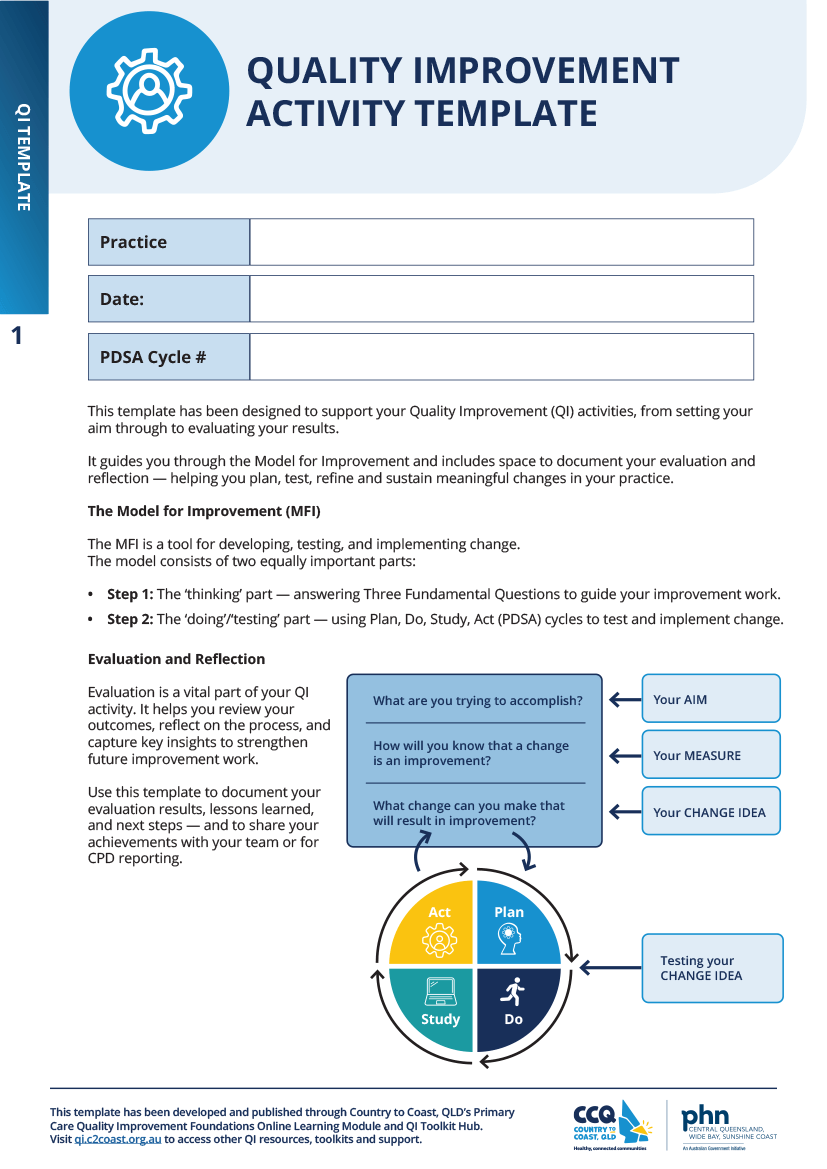
Kickstart your quality improvement activity by bringing together a quality improvement team. Together, you’ll identify the key challenges and come up with innovative solutions, ensuring you all share a clear understanding of the improvement objectives and strategies.

  1. Engage with your Primary Health Coordinator from CCQ; they can offer tailored support, resources and guidance to enhance your QI efforts wherever you are in your QI journey. Your Primary Health Coordinator can support your practice to:
    • Bring a QI team together to decide on an improvement idea
    • Plan, start and finish a QI activity
    • Facilitate QI meetings
    • Create practice-wide systems improvement
  1. Gather data and information. Review current practice data and processes for managing perimenopause/menopause.
  2. Identify and discuss any common enablers and barriers to optimal care for perimenopause/menopause. Consider using process maps, flow charts or driver diagrams to generate change ideas and improve processes.

What data might you need? You’ll need data to understand the problem and measure your outcomes. We suggest you start with:

  1. Primary Sense can provide insight, detailed reports, and targeted guidance for improving data quality. The following reports are available within Primary Sense:
    • Health Assessments: identifies patients missing health assessments for 40-49-year old.
    • Cardiovascular Disease Risk Factors: highlights patients who are at risk of cardiovascular disease.
    • Bowel and Breast Cancer Screening: identifies patients aged 45-74 without evidence of bowel and/or breast cancer screening completed in the past two years.

To achieve your goal, you can consider several improvement ideas such as:

  1. Develop a practice procedure for offering a regular comprehensive perimenopause/menopause health assessment with the practice nurse and treating GP. Tip: Ensure this includes assessment of cardiovascular risk, osteoporosis risk, cancer screening and mental health.
  2. Conduct a practice education session on evidence-based treatments for perimenopause and menopause using the Australian Menopause Society or Jean Hailes resources as a guide.
  3. Conduct a patient awareness campaign about the importance of cardiovascular risk assessment for women in the mid-life stage. Consider leveraging Heart Health checks and utilising the Primary Sense report “Cardiovascular Disease Risk Factors” to identify appropriate patients and initiate conversations about perimenopause/menopause as part of these appointments.
  4. Consider how to incorporate regular discussion and management of bone health for women around perimenopause/menopause. Some possible examples could include adding a reminder to the patient file of all women aged 55, a patient education campaign or a screening questionnaire at reception for women over the age of 51.
  5. Develop a practice procedure to flag patient files in your clinical software when a woman reaches 45. When the patient presents to practice, consider a standardised workflow where a nurse opportunistically discusses perimenopause/menopause with the patient prior to their appointment.

Remember to self-report your QI project as a CPD activity. QI is a great tool for measuring tangible outcomes and demonstrating improvement in patient care!

Share your results with your CCQ practice support team and with your patients. Ensure you document your quality improvement activity to meet PIP QI guidelines and for CPD purposes.

References

  1. Australian Government Department of Health, Disability and Ageing. (2025). Government response to the inquiry into issues related to menopause and perimenopause. https://www.health.gov.au/sites/default/files/2025-02/government-response-to-inquiry-issues-related-to-menopause-and-perimenopause.pdf
  2. Australasian Menopause Society. (n.d.). What is menopause? Retrieved February 26, 2025, from https://www.menopause.org.au/hp/information-sheets/what-is-menopause
  3. Primary Sense. (2025). General Practice Data Extraction Program. Accessed February 2025.

Ready to begin this QI activity?

website Disclaimer

While the Australian Government Department of Health has contributed to the funding of this website, the information on this website does not necessarily reflect the views of the Australian Government and is not advice that is provided, or information that is endorsed, by the Australian Government.

The Australian Government is not responsible in negligence or otherwise for any injury, loss or damage however arising from the use of or the reliance on the information provided on this website.

Contact Us

Subscribe To Our Newsletter